Backers, Crowdfunding
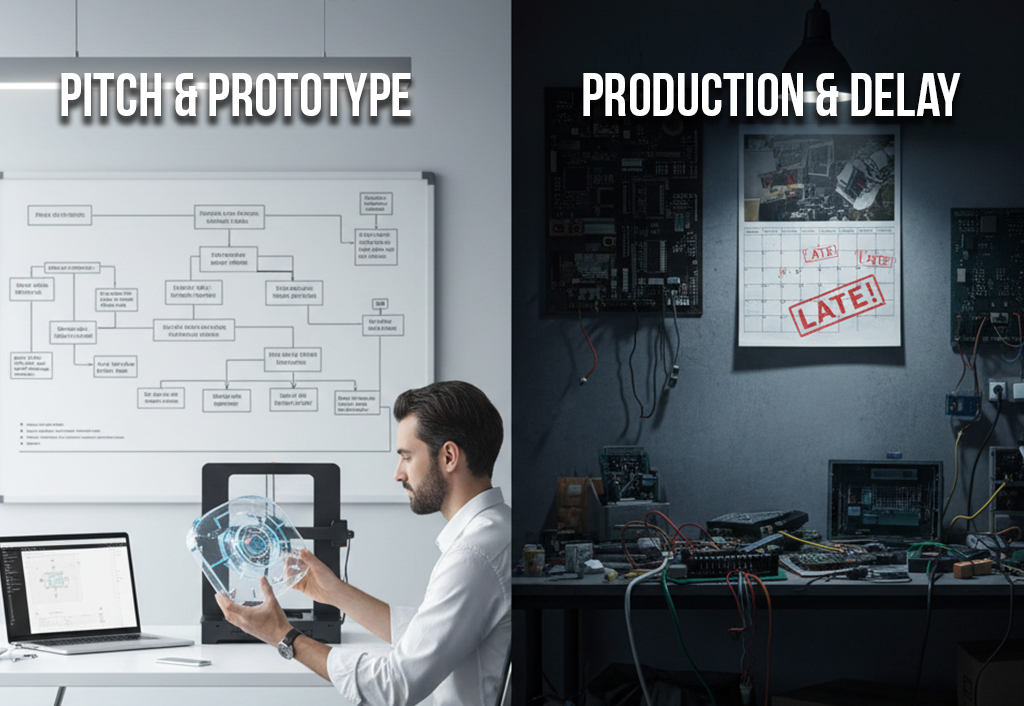
From Pitch to Product: The Real Crowdfunding Timeline (and Why It’s Almost Always Late)
Dec
One of the biggest reasons backers feel burned isn’t always scams—it’s expectations. Crowdfunding timelines are often wrong because creators underestimate how many steps exist between “cool prototype” and “shipped product.”
Here’s the real timeline backers should understand when evaluating Kickstarter and Indiegogo campaigns.
Phase 1: Prototype and validation
What you want to see:
- A working prototype
- Clear constraints and tradeoffs
- Evidence of testing
Phase 2: Engineering and design for manufacturing
This is where many campaigns struggle:
- Parts sourcing changes
- Thermal and battery issues
- App and firmware complexity
Phase 3: Tooling and certification
Tooling takes time. Certification takes time. If a campaign glosses over this, that’s a due diligence warning.
Phase 4: Pilot production
A serious team runs pilot builds to catch issues before mass production.
Phase 5: Mass production
Even good factories hit snags:
- Yield problems
- Component shortages
- Quality control failures
Phase 6: Freight, fulfillment, and customer support
Shipping isn’t just “send it.” It’s:
- Packaging
- Warehousing
- Customs
- Last-mile delivery
- Replacements and support
Why timelines slip (even for honest creators)
Common reasons:
- Underestimating complexity
- Changing features midstream
- Supplier delays
- Certification failures
- Cash flow constraints
What a trustworthy timeline looks like
A credible creator:
- Builds in buffer
- Names risks
- Shares milestones
- Updates with proof
CFJ promise:
we don’t just react to launch hype—we track what happens after funding.
Want CFJ to track a campaign you’re considering?
Subscribe on YouTube and send us the link—we’ll put it on the radar.
About Crowdfund Junkie
Crowdfund Junkie (CFJ) is a no-BS video podcast for the crowdfunding community. We track Kickstarter and Indiegogo campaigns from pitch to product—celebrating the creators who execute and calling out the red flags that backers need to see.
